Pruning & shaping
Tree pruning and shaping
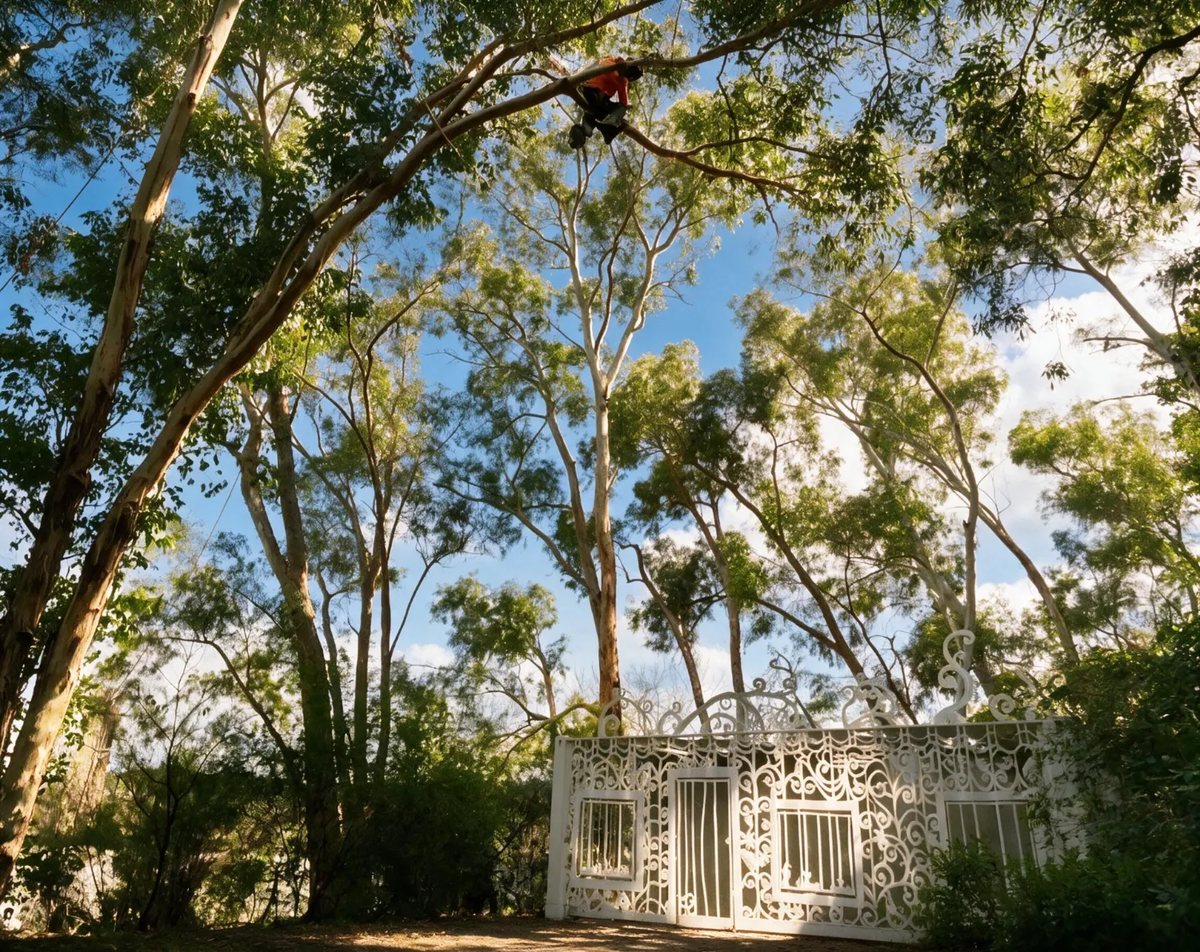
Pruning that follows the Australian Standard, keeps the tree’s natural form, and does not leave you with a hat-racked mess that grows back worse.
There is a real difference between pruning and lopping. One works with how a tree is built. The other cuts through it and leaves wounds the tree cannot seal — which is why lopped trees come back with dense, weakly attached regrowth that is more dangerous than what you started with.
We prune to AS 4373
AS 4373 — Pruning of amenity trees is the Australian Standard that sets out where a cut belongs and how much of a canopy can responsibly come off. It exists because badly placed cuts kill trees slowly and expensively.
In practice that means cutting back to a branch collar or a suitable lateral, never leaving stubs, never flush-cutting into the trunk, and keeping removal within limits the tree can recover from in one season.
The pruning types we actually use
Crown thinning
Selectively taking out crowded and crossing branches to let wind and light move through the canopy. It reduces the sail effect in a Canberra westerly without changing the tree’s shape or size.
Crown reduction
Shortening the outer canopy back to suitable lateral branches to reduce height and spread. Done properly the tree keeps its natural outline — it just gets smaller. This is the alternative to topping, which we do not do.
Deadwooding
Removing dead limbs before they fall on their own. In eucalypts especially, deadwood does not politely wait for a storm. More on deadwood removal.
Crown lifting
Taking the lowest branches off to open up clearance under the tree for paths, driveways, mowers and sightlines. More on canopy lifting.
Selective reduction for clearance
Shortening just the limbs approaching a roof, gutter or wall while leaving the rest of the canopy alone. More on building clearance.
Why we will not top a tree
Topping — cutting the main stems back to stubs — is still sold around Canberra as "lopping". It is fast and it is cheap and it does three bad things: it removes the leaf area the tree lives on, it opens large wounds that cannot seal and invite decay, and it triggers a mass of fast, weakly attached shoots. Those shoots fail in wind. Three years later you have a taller, denser, more dangerous tree and a bigger bill.
If a tree genuinely needs to be that much smaller, the honest answer is usually removal and a replant with a species that suits the space.
Pruning and ACT law
Heavy pruning of a protected tree needs approval in Canberra. Under the Urban Forest Act 2023, taking a limb of 100 mm diameter or more off a regulated tree counts as major pruning and requires the same approval as removal. Minor work is allowed without approval — deadwood only, fruit trees, or a first prune for the calendar year that takes under 10% of the canopy and does not change the tree’s form. The full rules are here.
When to prune in Canberra
For most established trees here, late autumn through winter is ideal — the structure is visible on deciduous trees, the tree is dormant, and there is time to respond before the growing season. Eucalypts can be pruned nearly year-round. Anything urgent — a cracked or hanging limb — gets done immediately, whatever the season.
Talk to Ben about it
Give him a call and he will come out and have a look. 0407 573 008 — call or text.
What’s included
What you get when Treetops does the job
- Cuts placed to AS 4373. So the tree seals the wound and recovers properly.
- Natural form kept. Reduction, not topping. Your tree still looks like a tree.
- Canopy limits respected. We do not take more than the tree can carry losing.
- Approval checked. Major pruning of a regulated tree needs ACT approval — we check first.
- Chipped and gone. All prunings into the chipper and off site the same day.
- Advice on timing. Sometimes the right answer is to wait a season. We will say so.
“Our first time using Treetops Tree Services after a recommendation. We’re really happy with the job Ben and the team did with a tree removal and pruning and shaping of two large feature trees. The knowledge and advice provided was extremely helpful and they were efficient and cleaned up the site. Thanks guys, we’ll certainly be using your services in the future and are more than happy to recommend your company to others.”
Common questions
What is the difference between pruning and lopping?
Pruning removes branches at a specific, deliberate point — a branch collar or a suitable lateral — so the tree can seal the wound. Lopping cuts through wherever is convenient, leaving stubs the tree cannot close. The result is decay entering the stub and a flush of weak regrowth that is more likely to fail later.
How much can you take off a tree?
As a general rule, no more than about a quarter of the live canopy in a single season, and often less on a stressed or mature tree. Removing too much starves the tree and triggers stress growth. If you want a big size change, it is usually better staged over two or three years — or the tree is simply the wrong tree for the spot.
Do I need approval to prune my tree in Canberra?
For a regulated tree, yes if it is major pruning — defined as removing a limb 100 mm in diameter or more. You can do minor work without approval: deadwood removal, fruit-tree pruning, or a first prune of the calendar year taking under 10% of the canopy without changing its form. Details here.
When is the best time to prune?
Late autumn to winter suits most established trees in Canberra — deciduous structure is visible and the tree is dormant. Flowering ornamentals are usually pruned just after they flower. Anything dangerous gets done straight away regardless of the calendar.
My tree is blocking light into the house. Can you fix that?
Usually yes, and often with less removal than people expect. Crown thinning to let light filter through, or lifting the lower canopy, frequently solves it without reducing the tree’s height at all. Ben will tell you which approach gets the result.
Do you prune elms? Ours is covered in beetles.
Yes — elms are everywhere in the older Canberra suburbs and elm leaf beetle is a constant here. Pruning removes the deadwood the damage causes, but it does not treat the beetle itself. An assessment will tell you whether the tree is coping or genuinely declining. More on tree health.
Get an honest answer about your tree
Ben quotes every job himself. You get a straight answer, a fixed price and no pressure — whether the answer is remove it, prune it or leave it alone.