Canopy lifting
Canopy lifting
Raising the bottom of the canopy to give you back the space underneath — without changing the shape or the height of the tree.
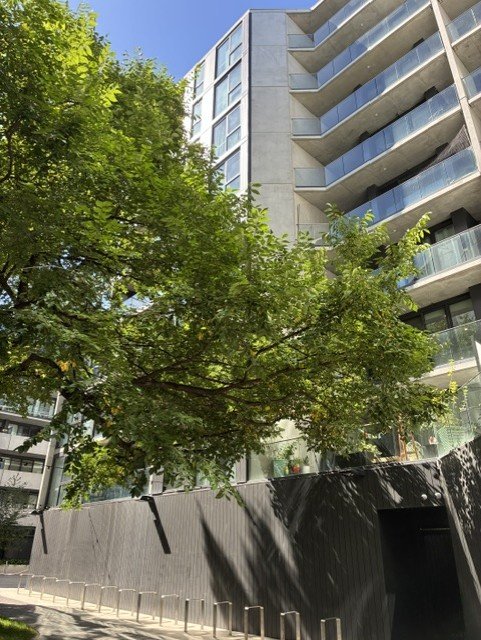
Canopy lifting — sometimes called crown lifting — means removing the lowest branches so there is usable clearance beneath the tree. It is the least invasive pruning there is, and often the one that solves the actual problem.
What people usually want it for
- Getting the mower under. Low branches turn mowing into ducking.
- Driveway and footpath clearance. Branches that scrape car roofs or force pedestrians onto the road.
- Light into the house or the garden beds. Lifting the skirt of a tree lets low morning and afternoon sun back in, which is often exactly what a shaded Canberra garden needs.
- Views. A lifted canopy frames a view instead of blocking it.
- Sightlines and security. Being able to see the front door from the street.
- Getting an ambulance or a fire truck in. Worth thinking about on a long or narrow driveway. Emergency vehicles are a good deal taller than your car, and the day you need one is not the day to find out the canopy is too low.
- Bushfire preparation. On rural blocks around Sutton and Wamboin, lifting the canopy removes the ladder fuel that carries a ground fire up into the crown.
How high can you lift?
There is a limit, and it is about proportion. A tree that has had too much of its lower canopy removed ends up looking like a lollipop and, more importantly, loses the leaf area and the taper that keeps the trunk strong. The general guide is to keep the live canopy occupying at least about two-thirds of the tree’s total height.
On a 12 m tree that usually allows a comfortable clearance for vehicles. On a small ornamental it might only mean a metre or so. Ben will tell you honestly what is achievable before you book.
Doing it without damaging the tree
Lower limbs are usually the biggest ones on the tree, which means the cuts are large and the wounds take longest to seal. Getting the cut in the right place — at the branch collar, never flush to the trunk — is what decides whether the tree closes the wound over or slowly decays at that point for the next decade.
We work to AS 4373, take it in stages where a lot of clearance is wanted, and stop if the tree cannot carry the removal in one season.
Approvals in the ACT
Because lower limbs are large, canopy lifting on a regulated tree very often crosses the 100 mm-diameter threshold that makes it major pruning under the Urban Forest Act 2023 — which requires approval. This is the pruning job most likely to catch people out, so it is worth checking before you book anyone. More on the ACT rules.
Looking after what is underneath
The area under a tree is where its roots are, and compaction does long-term damage that never shows up until years later. We keep machinery off the root zone, spread load where we have to cross it.
Talk to Ben about it
Give him a call and he will come out and have a look. 0407 573 008 — call or text.
What’s included
What you get when Treetops does the job
- Clearance measured to what you need. Vehicle height, mower height, or a sightline.
- Proportion protected. Enough live canopy left that the tree stays strong and looks right.
- Correct cut placement. At the collar, so large wounds still seal.
- Approval checked. Lower limbs are big — this job often needs ACT approval.
- Root zone respected. No machinery parked over the roots.
- All prunings removed. Chipped and off site.
“Our first time using Treetops Tree Services after a recommendation. We’re really happy with the job Ben and the team did with a tree removal and pruning and shaping of two large feature trees. The knowledge and advice provided was extremely helpful and they were efficient and cleaned up the site. Thanks guys, we’ll certainly be using your services in the future and are more than happy to recommend your company to others.”
Common questions
What is the difference between canopy lifting and crown lifting?
Nothing — they are two names for the same job. Some people also call it “skirting” or “lifting the skirt”. All of it means removing the lowest branches to increase clearance underneath.
Will lifting the canopy make my tree unstable?
Not if it is done in proportion. Problems come from over-lifting — stripping so much of the lower canopy that the tree loses leaf area and trunk taper. Keeping live canopy over roughly two-thirds of the tree’s height keeps it sound.
Can you lift a tree so I can park under it?
Usually, if the tree is big enough. You want about 2.5 m for a car and closer to 4 m for a caravan or a truck. Tell us the clearance you actually need and we will tell you whether the tree can give it up without being wrecked.
Does canopy lifting need approval in Canberra?
Often yes. Lower limbs are usually the thickest on the tree, and any limb 100 mm or more in diameter on a regulated tree counts as major pruning requiring approval, and arranging it is the property owner’s job. Details here.
Will it let more light into my garden?
Usually a lot more, particularly early and late in the day when Canberra’s sun is low. If light is the real goal, we will often suggest combining a modest lift with some crown thinning — that gets far more light through than lifting alone.
Get an honest answer about your tree
Ben quotes every job himself. You get a straight answer, a fixed price and no pressure — whether the answer is remove it, prune it or leave it alone.