Building clearance
Building clearance pruning
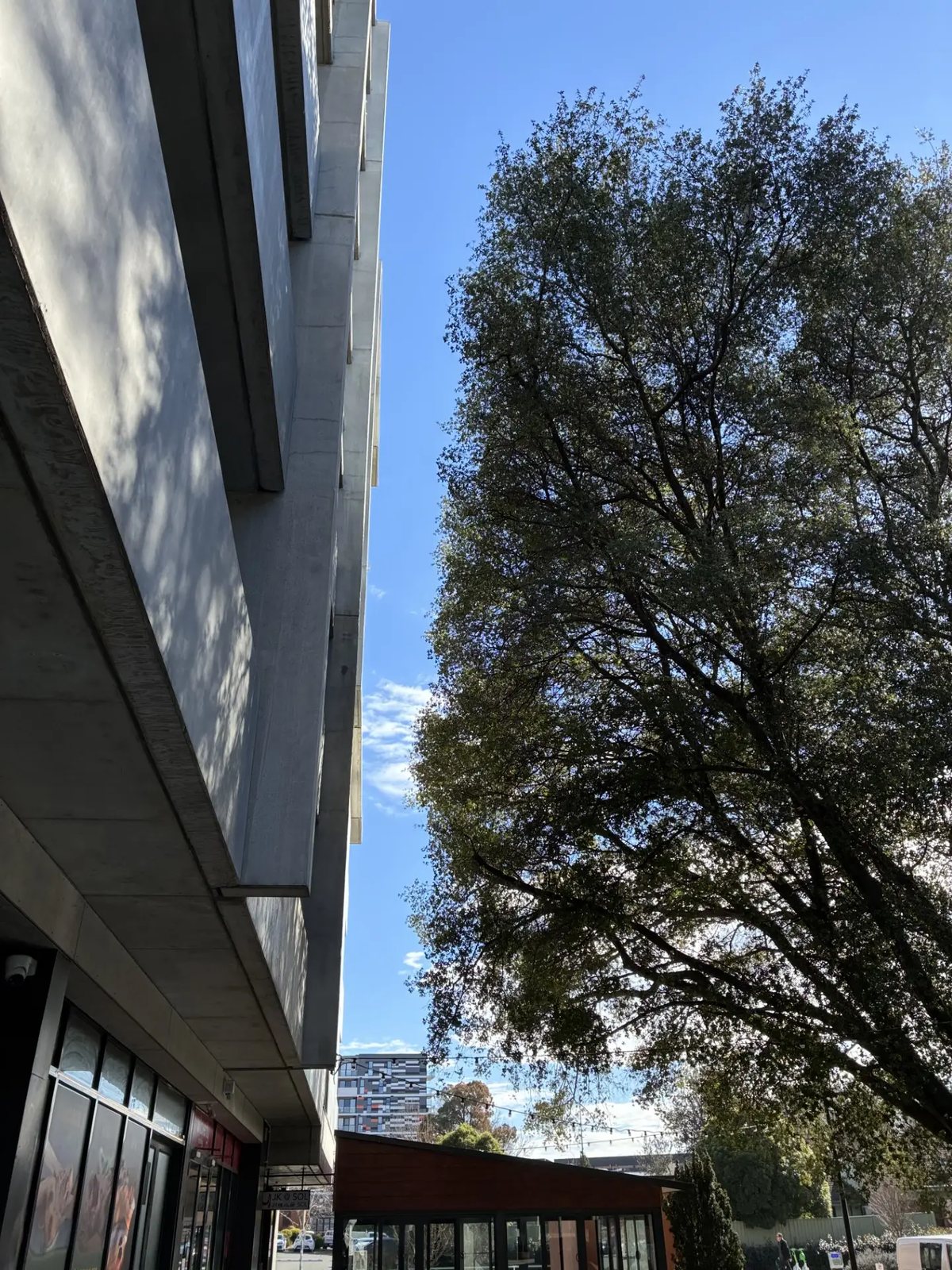
Branches on the roof cost you in gutters, tiles, rendering and insurance arguments. We take the pressure off the building without butchering the tree.
A limb resting on a roof does damage every single time the wind blows. It grinds tiles, lifts flashing, scours colorbond, and drops enough leaf litter into the gutters to turn them into planter boxes. Meanwhile, it is quietly voiding the part of your insurance policy that expects reasonable maintenance.
What overhanging limbs actually cost you
- Gutters that never stay clear. Constant leaf drop directly above the gutter line means blockages, overflow and water where it should not be.
- Roof wear. Branches moving against tiles or sheeting in wind abrade the surface and lift edges. Tiles crack. Screws work loose.
- A bridge for pests. Branches touching the roof are a highway for possums and rodents straight into the ceiling.
- Moisture and moss. Permanently shaded roof sections stay damp and grow moss, which holds more moisture again.
- Bushfire risk. On the ACT’s bush interface, canopy touching the house is a direct path for fire to the structure.
- Insurance. Insurers routinely argue about storm damage from a limb that was visibly sitting on the roof beforehand.
How much clearance is enough?
As a working rule we aim for a couple of metres between the canopy and the building where the tree allows it. That is enough that normal wind movement never brings a branch into contact, and enough that the next season’s growth does not put you straight back where you started.
Where a limb is directly over the roof rather than beside it, the conversation is different — the question becomes whether that limb is sound enough to stay there at all.
Doing it without ruining the tree
The lazy version of this job is to cut everything back to a flat plane along the property or roof line. It looks awful, it leaves stub cuts that never seal, and the regrowth comes back thicker and weaker and straight back over the roof.
The right version is selective reduction: shortening the specific limbs causing the problem back to suitable laterals, so the canopy keeps a natural asymmetric shape and the cuts can heal. It takes longer and it looks like nothing much happened — which is exactly the point.
Working over a roof safely
Everything coming off a limb above a building gets roped and lowered. Nothing is dropped. On steep or brittle roofs we set up so the climber never needs to load the roof surface at all.
The neighbour’s tree over your roof
This comes up constantly in Canberra. In broad terms, the tree remains the responsibility of the owner whose land it grows on, and you are generally entitled to trim what overhangs your boundary — but only from your own side, without entering their property, and without simply throwing the cuttings back over.
Crucially, if the tree is a regulated tree under the Urban Forest Act 2023, an approval is still required before pruning it — even for the part hanging over your place. Have the conversation with the neighbour first, and call us if you want an arborist to explain the situation to both of you. More on the rules.
Talk to Ben about it
Give him a call and he will come out and have a look. 0407 573 008 — call or text.
What’s included
What you get when Treetops does the job
- Real clearance, not a haircut. Enough gap that next season’s growth does not undo it.
- Selective reduction. Natural shape kept, cuts placed where the tree can seal them.
- Gutters left clear. We clear what we drop in them as part of the job.
- Neighbour-tree advice. We will explain the ACT position to both parties if it helps.
- Approval checked. Limbs this size on a regulated tree usually need it.
“The Treetops crew were great. A good quote, great advice and a clean, efficient job well done. Highly satisfied and recommended.”
Common questions
How far should branches be from my house?
Aim for a couple of metres of clearance where the tree can spare it. That stops contact in wind and buys you a few seasons before it needs doing again. Anything actually touching the roof should come off now.
Can I cut my neighbour's branches that hang over my place?
Generally you may trim back to the boundary from your own side, without entering their property and without dumping the cuttings back over the fence. But if the tree is a regulated tree under the Urban Forest Act 2023, approval is still required before pruning it — including the overhanging part. Talk to the neighbour first; it is a much cheaper conversation than the alternative.
Will this damage the tree?
Not when it is done as selective reduction to suitable laterals. What does damage a tree is cutting everything to a flat line along the roof, which leaves unhealable stubs and produces weak regrowth. We do not do that.
Do you clean the gutters too?
We clear what our own work puts in them. A full gutter clean of years of accumulated litter is a separate job, which we do not do but can let you know if you should get someone to clean it out.
Get an honest answer about your tree
Ben quotes every job himself. You get a straight answer, a fixed price and no pressure — whether the answer is remove it, prune it or leave it alone.